
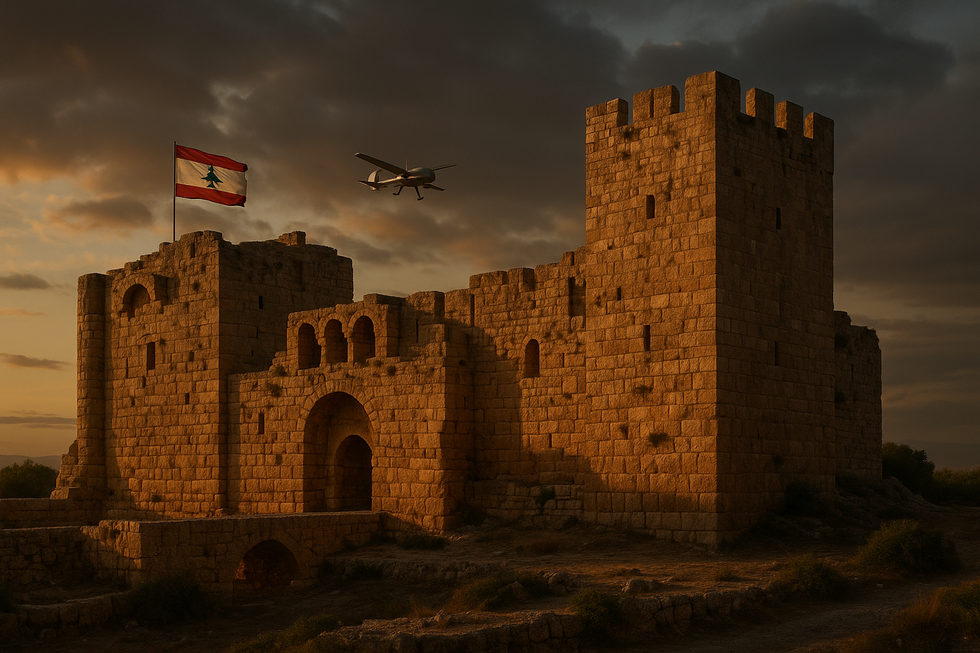
Castle Captured: A Modern-Day Game of Kings and Pawns
In a theater of harsh realities and complex geopolitical chess – or perhaps more aptly, a game of Risk reimagined on a grand scale – Israel recently took center stage by seizing a medieval castle in Lebanon 🏰. One cannot help but wonder if the ghosts of yesteryear’s knights were amused by the latest bout of territorial tug-of-war. As dust settled over ancient stones, was it history repeating itself, or merely the ennui of nations locked in endless, cyclical disputes?
While one side advocates security, the other seethes at perceived aggression, each claim as old and fraught with legend as the crenelled stones themselves. The irony here is undeniable: amidst the silicon circuits of the 21st century, we find ourselves facing conflicts ordinarily reserved for timeworn tomes – though back then, swords clanged instead of missiles soaring through sterile skies. It’s curious, this juxtaposition of eras where human ambition remains constant, yet its tools change. 🤔
The castle, both a literal bastion and a symbol of perpetually contested dominance, stands as a silent witness. Its weathered ramparts echo the dialogues of power that have persisted through millennia. “Who owns the land?” transforms into a familiar refrain, as each party claims moral high ground but perhaps forgets that the ground itself cares little for those who fight upon it. Striking antitheses persist as nations expand their reach while the ancient stones remind them of former empires lost to time.
With a castle now under different reins 🏰⚔️, questions abound. Does this physical conquest signal an ideological victory, or merely underline the transient nature of human claims? In the context of modern geopolitics, where alliances shift like sand dunes in a desert, is any ground truly “secured”? Occupation today doesn’t necessarily translate to peace tomorrow, much like a house of cards built in the breeze. 🃏💨
Perhaps, as the evening sun casts shadows over the castle walls, the world should reflect on the past to illuminate the future. What shadows will these recent events cast on the fragile tapestry of Middle Eastern politics? When tangible achievements are built on the intangible platform of diplomatic negotiations, the real challenge lies in ensuring such gains coalesce into lasting peace rather than evanescent victories. Maybe only then will the echoes of swords be replaced by the notes of accord. 🕊️